Labrador tea
Labrador tea (Thermopsis rhombifolia)
Also known as: Ledum groenlandicum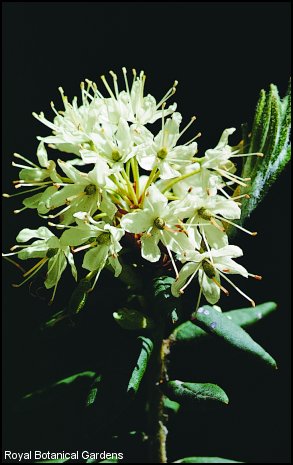


Bloom time: June - July
Additional photos: General: This erect evergreen shrub, up to 1 m tall, often forms colonies.
Leaves & Twigs:
- The leathery, narrow, oblong leaves are about 2-5 cm long, with rusty matted hairs on the underside (new leaves have white hairs underneath). The edges of the leaves roll under to help retain moisture.
- New twigs are densely covered with brown hairs; old stems become reddish-brown to grey.
Habitat: Shade-intolerant and often found on moist to wet soils, Labrador tea is common on open peatland dominated by sphagnum moss and in open-canopy coniferous forests.
PlantWatch Pointers: Select a typical patch of plants, if the plants are very abundant, mark off a l-metre-square section to observe.
To Observe:
- First bloom: when the first flowers are open in the observed plants (3 places).
- Mid bloom: when 50% of the flowers are open in the observed plants.
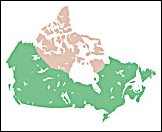
This species is monitored in:
- Alberta
- British Columbia
- Manitoba
- New Brunswick
- Newfoundland and Labrador
- Northwest Territories
- Nova Scotia
- Nunavut
- Ontario
- Prince Edward Island
- Quebec
- Saskatchewan
- Yukon
Historically, the leaves of Labrador tea were hung in closets to repel moths, as well as ghosts.