Larch
Larch (Larix laricina)
Also known as: tamarack, hackmatack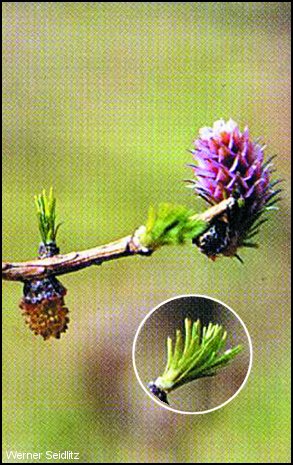


Bloom time: April - May
Additional photos: General: Medium-sized coniferous tree; grows up to 20 m tall, with scaly bark. In autumn, the needles turn yellow and fall from the tree.
Leaves & Twigs: Flowers & Fruits:
- Male and female cones can appear on the same branches, but observe male cones only for PlantWatch.
- Male cones: small, less noticeable mounds of yellow-brown pollen sacs that wither and fall after shedding pollen.
- Female cones: pinkish-purple mini-cones about 1 cm long.
PlantWatch Pointers: Tag a typical tree for observation.
To Observe:
- First bloom: when the first pollen is being shed by the male cones on the observed tree (3 places).
- Mid bloom: when 50% of the male cones are abundantly shedding pollen.
- Leafing: when the tufts of needles are lengthening considerably and starting to spread open at the tip (3 places).

This species is monitored in:
- Alberta
- British Columbia
- Manitoba
- New Brunswick
- Newfoundland and Labrador
- Northwest Territories
- Nova Scotia
- Ontario
- Prince Edward Island
- Quebec
- Saskatchewan
- Yukon
Larch is the only conifer that sheds all of its needles annually.