Cloudberry
Cloudberry (Rubus chamaemorus L)
Also known as: bake-apple, salmonberry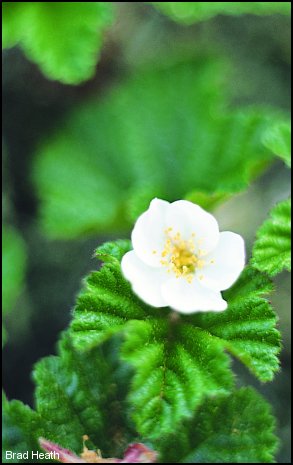


Bloom time: June - July
Additional photos:
General: This low, creeping perennial dies back each winter.
Leaves & Twigs:
Flowers & Fruits:
- Solitary flowers (1-3 cm across) have five white petals at the tip of the stem.
- Cloudberry plants are male or female, but only the female plant bears fruit - hard red berries that turn yellowish or amber-coloured when ripe in late July.
Habitat: This plant prefers moist tundra, bog habitats and heaths. Usually found with sphagnum mosses or lichens, it is widespread across the low arctic and boreal forest regions.
PlantWatch Pointers: Select a typical patch of plants, if the plants are very abundant, mark off a l-metre-square section to observe.
To Observe:
- First bloom: when the first flowers are open in the observed plants (3 places).
- Mid bloom: when 50% of the flowers are open in the observed plants.
Distribution Map:
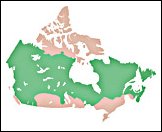
This species is monitored in:
- Alberta
- Manitoba
- Newfoundland and Labrador
- Northwest Territories
- Nunavut
- Quebec
- Saskatchewan
- Yukon
Cloudberry is called a "pioneer plant" because it quickly colonizes an area following fire or logging; however, the plants don't flower until about seven years after germination.